
"machine harvesting"
5000 article(s) found

What is Sumatran wet planing? why Sumatran coffee is mostly wet planed.
Professional coffee knowledge exchange more coffee bean information please follow the coffee workshop (Wechat official account cafe_style) Sumatran coffee is fascinating for its charming Chinese fir herbal flavor and unique spice flavor, and such a unique coffee on the coffee map, do you know their real growth environment? Sumatra is located on the equatorial line, and most of the island is heated.

Flavor description of Honduran Coffee beans introduction of Grinding Calibration method in Manor production area
The flavor description of Honduran coffee beans the grinding scale treatment method of the manor production area introduces that the granules of Honduran coffee beans are large in shape, uniform in size, uniform in color and shiny. In order to facilitate harvesting, farmers will prune the coffee trees to no more than 150 centimeters, because if they grow too high, they must set up ladders to pick, which is not only time-consuming, but also may be hurt by bending branches.

Grinding scale of San Juan Xido Coffee Bean in Honduras
The grinding scale of San Juan Xido coffee beans in Honduras taste introduced that high-quality coffee in Honduras uses a washing method to treat coffee beans, usually after soaking, when soaking, the defective fruit will surface and can be discarded first. Then put the good fruit into the fruit peeling machine and peel off the peel with the rotating force of the machine.

Introduction to the characteristic varieties of grinding degree production area of Honduran coffee bean flavor description treatment method
Honduran coffee beans introduce the granules of Honduran coffee beans are large in shape, uniform in size, uniform in color and glossy. In order to facilitate harvesting, farmers will prune the coffee trees to no more than 150 centimeters, because if they grow too high, they have to set up ladders to pick, which is not only time-consuming, but also may damage the trees by bending branches. Because the ripening period of each fruit of coffee beans is different.

Flavor description of Brazilian Hilado Coffee Variety introduction of Regional treatment method for Manor production
Brazilian Hilado Coffee Flavor describes the taste of manor-produced regional treatment varieties introduce hand-picked ripe coffee beans in the coffee treatment Serrado is harvested for its own production. Drawn by each grain is superior in the sweetness of experienced cherry cultivation, but the quality and popularity of Serrado owns NO.1, which is a rare crop annual agreement that determines a quantitative yield limit. Number one in Japan
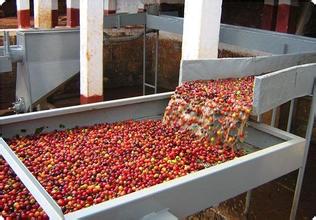
Treatment of raw coffee beans: introduction to the operation method and purpose of washing method
Washing method: 1, select beans: put the harvested fruit in a water tank and soak for about 24 hours. At this time, ripe fruit will sink, while immature and overripe fruit will float up and can be removed. 2. Remove the pulp: use a machine to remove the skin and pulp, leaving only the coffee beans wrapped in the endocarp. At this time, there is a layer of mucous membrane on the outside of the beans, and the process of washing is

Characteristics of boutique coffee beans join machine boutique coffee shop coffee
Characteristics of boutique coffee beans 1. Boutique coffee beans must be high-quality beans with flawless beans. It should have an outstanding flavor, not without a bad taste, but with a particularly good taste. two。 Boutique coffee beans must be excellent varieties, such as the original bourbon species, mocha species and Tippica species. The coffee beans produced by these trees have a unique aroma and flavor, far beyond the ability of other tree species.

The way coffee beans are treated after picking.
Every winter (dry season) is the harvest time for coffee beans. After three to four years of growth, coffee trees mature and begin to bear fruit. The fruits are arranged in a string or clustered together next to the branches. Coffee beans are wrapped in red skins and can be picked as soon as they turn red. Most Arabica coffee beans mature from June to August and Roberts coffee beans from September to October. therefore,

Description of Flavor of Coffee washing method introduction of Grinding scale Sun Honey
Coffee treatment method 1, select beans: put the harvested fruit in the water tank, the ripe fruit will sink, while the unripe and overripe fruit will float up and can be removed. 2, drying: put the selected ripe fruit in the square for 5-6 days until it is fully dry. At this time, the fruit becomes dark brown with a moisture content of 13% 3 and shelling: the peel changes after drying.

How many coffee beans can a coffee tree produce in a year?
How many coffee beans can a coffee tree produce in a year to grow into a high-harvest and high-quality coffee tree? it is necessary to take good care of and select the seedlings. Generally, they begin to sprout about 40 days after sowing, and then transplant them to the greenhouse before they can grow into saplings. Wait until the saplings grow to 40-50 cm high before choosing the healthier saplings to be transplanted to the farm. This approach is more traditional, but only

Introduction to the drying method of Red Honey Wine with Honey treated Coffee beans
Honey-treated coffee beans are washed in the sun. Choose beans: if you put the harvested fruit in the water tank, the ripe fruit will sink, while the immature and overripe fruit will float up and can be removed. two。 Drying: place the selected ripe fruits in the square and expose them to the sun for 5 or 6 days until fully dried. At this time, the fruit turns dark brown and the moisture content drops to 13%. 3. Shelling: dry

Processing of fresh coffee beans
Wet treatment requires the use of specific equipment and a large amount of water. When properly operated, it can ensure that the original quality of coffee beans is better preserved, producing homogeneous coffee beans with few bad beans. As a result, coffee beans produced in this way are generally considered to be of better quality and charge higher prices. Even after careful harvest, a certain amount of underdried and undercooked coffee

Even the "careful machine" of coffee-want to harvest consumers with a good cup of coffee?
Professional coffee knowledge exchange more coffee bean information Please follow the coffee workshop (Wechat official account cafe_style) in the increasingly noisy and lively Chinese coffee market in the last year, we have heard too many games, games or business models, whether it is Ruixing, the newly rising unicorn in the Chinese market, or the American coffee giant, which is severely challenged by emerging domestic brands for the first time this year.

The ratio of brewing coffee to water in the production process of coffee trees
After the fruit is harvested from harvest to delivery, the skin and flesh must be removed. The endocarp and silver peel are removed to form coffee beans. There are two kinds of methods: drying (natural drying, non-washing) and washing. Dry type, the operation is relatively simple, the harvested fruit will be spread on the dry ground and basked in the sun for a week or two. The sound of rattling can be heard when it is turned, which means it is dry. Then peel off the shell.

Introduction to the characteristics of varieties produced by grinding scale by the method of flavor description of coffee beans in Honduras
High-quality coffee in Honduras uses water washing to deal with coffee beans, usually after soaking, when the defective fruit will surface, it can be discarded first. Then put the good fruit into the fruit peeling machine and peel off the peel with the rotating force of the machine. Peeled fruits are screened by machines to select fruits of high quality. Usually the bigger the fruit.

Colombia coffee beans origin travel notes Colombia coffee beans cultivation picking processing record
Professional barista exchanges, please pay attention to coffee workshop (Weixin Official Accounts cafe_style) The top three coffee producing countries in the world are Brazil, Vietnam and Colombia, and there are three varieties, Arabica (accounting for about 70% of the world's production), Robusta and Liberia Liberica, and Arabica is cultivated in Colombia.

A brief introduction to the origin, development, history and culture of the well-balanced San Juan Xido boutique coffee beans in Honduras
High-quality coffee in Honduras uses water washing to deal with coffee beans, usually after soaking, when the defective fruit will surface, it can be discarded first. Then put the good fruit into the fruit peeling machine and peel off the peel with the rotating force of the machine. Peeled fruits are screened by machines to select fruits of high quality. Usually the bigger the fruit.
Fine coffee learn the production process of coffee beans
A coffee tree can harvest 3-5 kg of fruit, and raw coffee beans account for 1. 5% of the fruit quality. Going from fruit to raw coffee beans is really a time-consuming and laborious task. Arabian, Robusta and Librian Arabian coffee account for about 2% of the world's coffee production. The plant is not suitable for high temperature, low temperature, more rain and less rain. Coffee beans are oval flat and have a high height.

Two methods for processing fresh coffee beans: wet treatment and drying
Wet treatment requires the use of specific equipment and a large amount of water. When properly operated, it can ensure that the original quality of coffee beans is better preserved, producing homogeneous coffee beans with few bad beans. As a result, coffee beans produced in this way are generally considered to be of better quality and charge higher prices. Even after careful harvest, a certain amount of underdried and undercooked coffee
Detailed explanation of two methods in the processing of Coffee fresh beans
Wet treatment requires the use of specific equipment and a large amount of water. When properly operated, it can ensure that the original quality of coffee beans is better preserved, producing homogeneous coffee beans with few bad beans. As a result, coffee beans produced in this way are generally considered to be of better quality and charge higher prices. Even after careful harvest, a certain amount of underdried and undercooked coffee